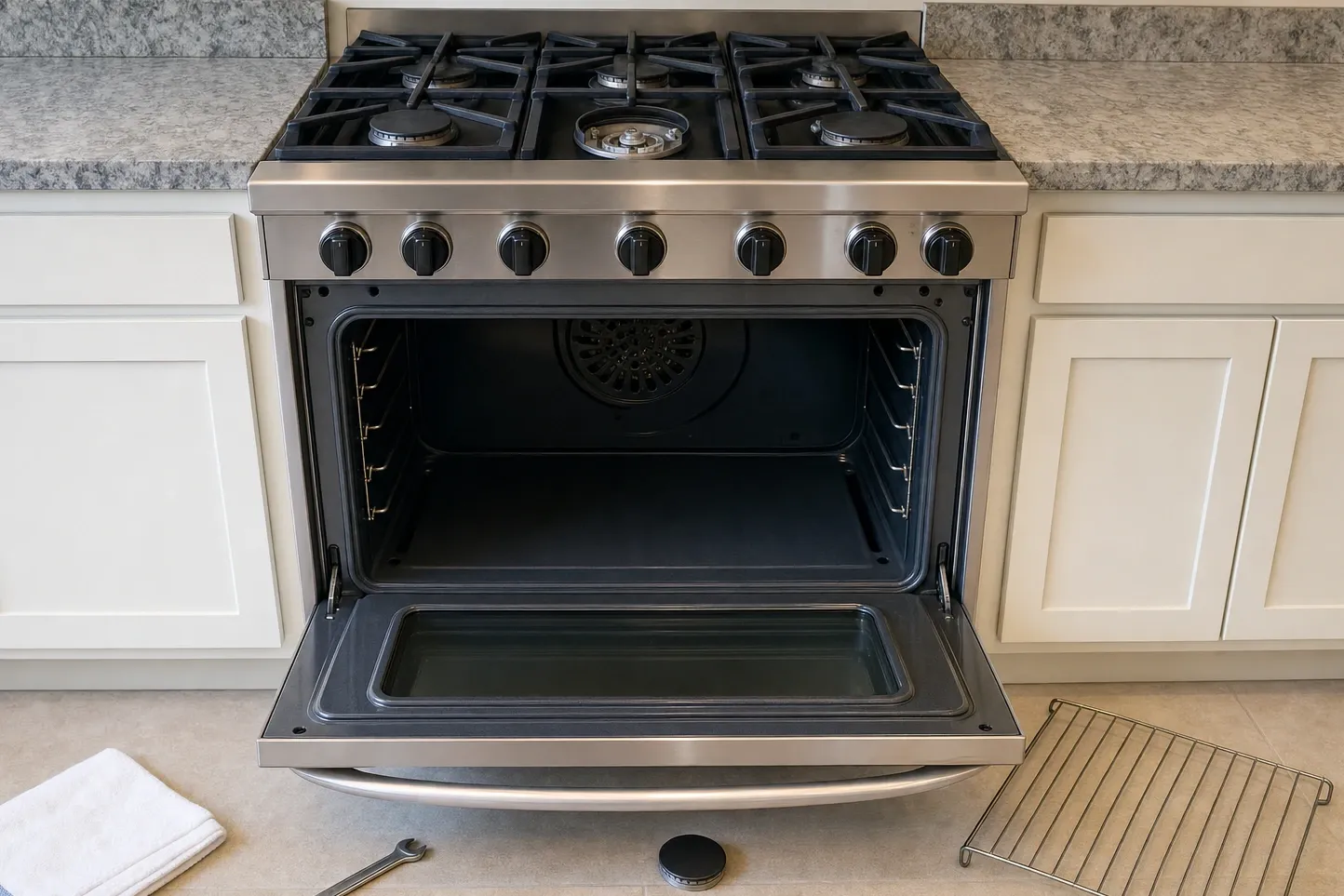
Built 2002 to 2014
R48 series
- Width
- 48 inch
- On the top
- Burners with griddle or charbroiler
- Underneath
- Gas oven
Older 48-inch Wolf R ranges: igniters and valves
Wolf's timeline lists eight forty-eight inch R bodies and they are not interchangeable: two of them stopped in 2005 and 2006 while the rest ran to 2014. What still wears on every one of them is ignition and valve work. Read the serial off the burner box to Wolf Repair Denver on (720) 575-1433 before a single part gets named.
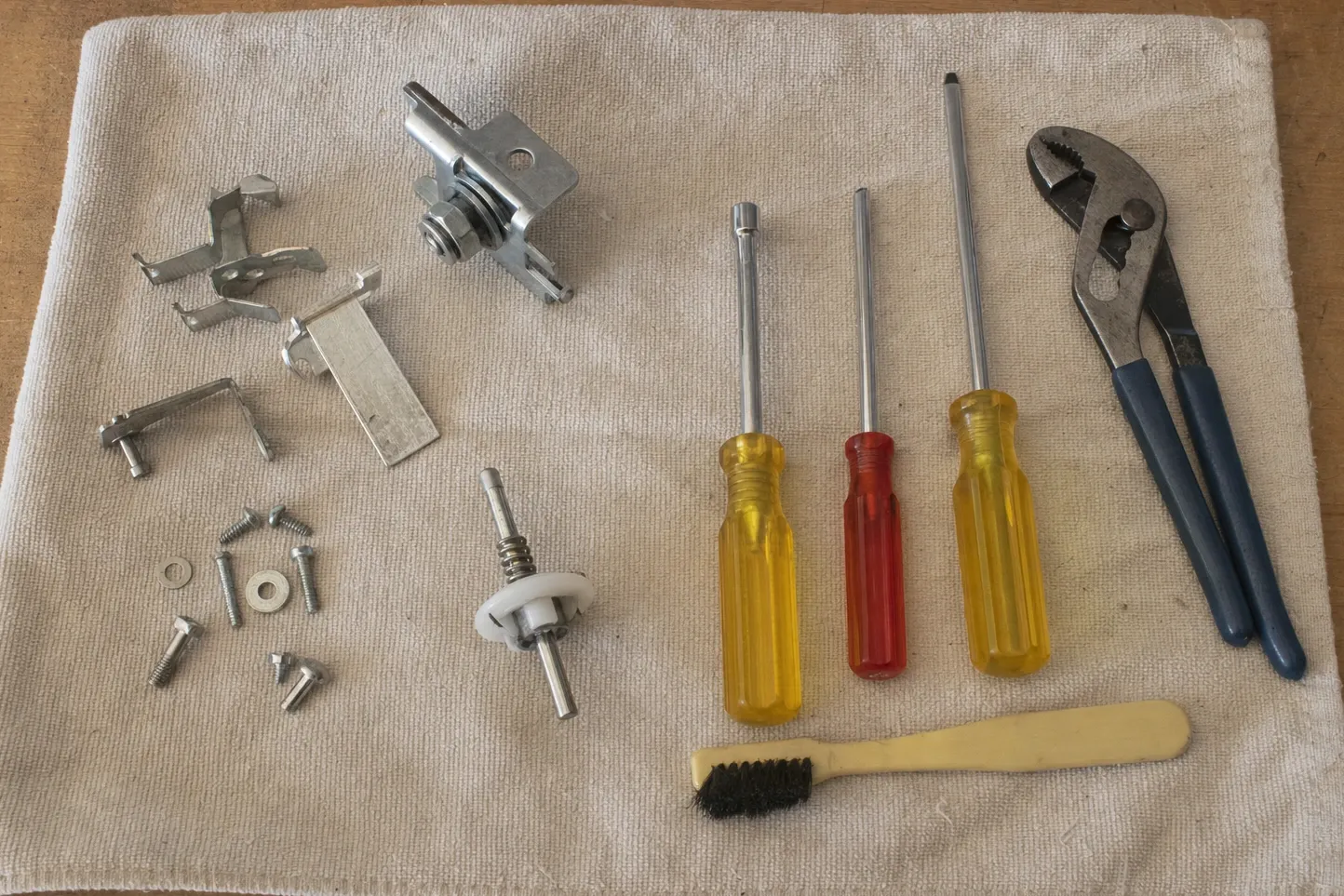
These are the widest bodies of the old series and there are more of them than of any other width, which is the reason this page exists at all. A run of twelve years does not stay still: components changed partway through, so a range built in 2004 and one built in 2011 can wear the same code and take different pieces.
The practical consequence is the order of work. On anything current the model answers the parts question. Here the serial does, and it is not somewhere obvious — the tag sits under the left-hand burner pan, which has to come out before anybody can read it. Five minutes with the grates off at the start of a call is what stops a second visit at the end of one.
What it usually turns out to be
Every figure below is a band, not a quote. The fault is found first, the number is agreed with you second, and nothing is ordered until you have said yes to it.
-
A boil-over went down inside the top rather than across it
UsuallyThese older tops use open burners instead of the sealed ones on a current range, so what spills travels down into the burner box below. It wants opening, drying and cleaning underneath before the range is worked hard again.
Quoted from Quoted after the diagnosis
-
The module half is dead while the burners light normally
UsuallyA griddle or charbroiler section has a valve and an ignition of its own, so it can fail on its own while the rest of the top stays perfectly healthy. Which of the two has gone is tested on the spot, not assumed.
Quoted from Quoted after the diagnosis
-
The centre grate rocks whenever a heavy pan goes on it
UsuallyIts foot pads and rubber washers are held by tension alone and they work their way loose. Wolf's answer for a centre grate that has lost its pads is a replacement grate, and whether pads can be had at all depends on the serial.
Quoted from Quoted after the diagnosis
-
Sparking that carries on well after the flame is up
UsuallyReversed polarity at the outlet is on Wolf's list for a burner that sparks constantly, alongside a failed switch, electrode or module. Both ends get tested with a meter, and on a range of this age neither end is a surprise.
Quoted from Igniter or spark module $180–$470
-
A knob turns, but the valve behind it feels notchy
UsuallyLubricant in the stem has gone to varnish across two decades of heat. Plenty of stems strip, clean and re-grease happily; where the taper itself has worn, the valve is the part, and that is the moment the serial matters most.
Quoted from Burner valve or orifice service $240–$610
Still wondering
How many 48-inch R models did Wolf actually build?
Eight, by its own timeline: R484CG, R484DG, R484F, R484DC, R482CF, R486C, R486G and the eight-burner body Wolf prints as R4888. All of them started in 2002. R484DC finished in 2005 and R482CF in 2006, while the other six carried on until 2014.
Do the letters at the end of the code change the parts?
They tell you what was fitted between the burners, so two forty-eight inch R ranges standing side by side are not the same appliance at all. The part number still comes off the serial rather than the code, but the letters decide which half of the top you are even talking about.
Is it worth putting ignition parts into a range this old?
Usually, because there is so little else in one to fail expensively. The body is steel, the valves are mechanical, and ignition parts are the wearing items. Where the piece yours needs has genuinely gone out of supply, Wolf Repair Denver will tell you that on the phone rather than after a visit.